

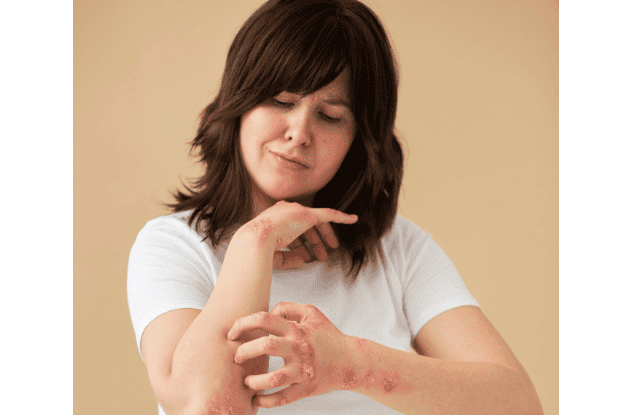
Despite its seemingly innocuous name, toasted skin syndrome has a profound impact, and its history is more extensive than most people realize. Erythema abigne is the medical term for this condition, which develops after repeated low-level heat exposure. In contrast to a burn, which appears immediately, this develops gradually, leaving behind red, web-like marks, discomfort, and occasionally stains that resemble ink spilled on delicate paper.
In the past, the condition was associated with women who leaned too close to ancient cast-iron ranges, coal workers, or stove tenders. Faces glowed from patterned marks that indicated survival through warmth, not from health. However, the syndrome has become surprisingly contemporary in recent decades, being associated more with laptops, car heaters, and even long gaming sessions than with coal or wood. It reminds us how human habits change but the risks stay the same, much like other old conditions that have resurfaced in new forms.
Key Details About Toasted Skin Syndrome
| Category | Information |
|---|---|
| Medical Name | Erythema ab igne |
| Common Term | Toasted Skin Syndrome |
| Symptoms | Discoloration, itching, burning, net-like skin patterns |
| Heat Range | 109.4 to 116.6°F (43–47°C) |
| Modern Causes | Laptops on thighs, car seat heaters, heating pads, space heaters |
| Historical Causes | Coal stoves, open fires, wood-burning ovens |
| Long-Term Risks | Squamous cell carcinoma, Merkel cell carcinoma, cutaneous lymphoma |
| Best Prevention | Avoid prolonged exposure, use barriers, moderate heat source usage |
| Treatment Options | Remove heat source, topical retinoids, dermatology support |
| Source |
Laptops are now closer to the body than ever before due to remote work and continuous connectivity. Unaware that the invisible heat is leaving a mark on their skin, many users place their devices directly on their thighs for hours at a time. The left thigh, where laptop vents frequently release warm air, is especially telling. Ironically, tools that seem so flexible in facilitating work and creativity can eventually cause subtle harm. Children, whose skin is noticeably more sensitive, have reported cases in which playing video games on a daily basis left them with subtle lattice patterns on their legs. This is disturbing evidence of how entertainment and comfort can become warning signs when they are overused.
Another picture is painted by the rise in car seat heaters. These features, which were once considered symbols of luxury, can become misleadingly harmful if they are used frequently. Physicians describe patients who developed odd rashes that would not go away after long winter commutes during which heaters ran for hours. Even though the heat itself is soothing, the skin underneath is subtly changing structurally, losing elasticity, and changing at the microscopic level. This change is believed to resemble UV radiation damage, which makes the condition much more serious than its cutesy moniker implies.
Hot water bottles and heating pads, which were once commonplace items for pain relief, have also been included in the story. Long-term use of something designed to relieve sore muscles can cause backs or abdomens to become permanently discolored. The original causes of the syndrome are echoed by space heaters and radiators, which are still used by older generations. The rhythm of repetition—the gradual trickle of heat over time, leaving an impression without the drama of a flame—is what connects all these causes.
Although they are not the norm, complications merit consideration. Rare but extremely dangerous cases of toasted skin syndrome developing into cancers, such as squamous cell carcinoma and Merkel cell carcinoma, are documented in medical literature. The repercussions were especially harsh for those who disregarded or disregarded the marks. These results emphasize a very obvious lesson: shadows can exist in even the most seemingly innocuous circumstances.
The simplest step in treatment is to remove the source of the offending heat. Discoloration usually goes away, though it can occasionally take a while. Retinoids and other topical creams are recommended to hasten the healing process. Although it is still rare, dermatologists may suggest cutting-edge therapies like laser therapy in cases that are persistent. The preventive measures that are currently available stand out as being especially innovative. Skin can be kept unmarked with remarkable effectiveness by using laptop stands, thermal shields, moderate heater use, or even deliberate breaks.
The way toasted skin syndrome illustrates the unstated costs of contemporary comfort is what makes it such an interesting topic. Similar to how posture problems arose with desk culture and eye strain with smartphones, this syndrome is another subtle consequence of a convenience-driven lifestyle. It can be thought of as the body’s way of subtly reminding you to maintain your balance. These messages are displayed on the canvas of our skin, which serves as our first line of defense.
Public personalities and celebrities, who are frequently seen broadcasting comfortable car commutes or relaxing with laptops on their knees, unwittingly normalize risky behaviors. There are similarities with skin cancer campaigns where prominent voices changed public opinion, even though no celebrity has yet to come forward as an ambassador of awareness for this illness. The idea of a cultural shift in the future, where influencers advocate for fashionable, responsible behaviors like laptop stands or moderate use of heated seating, is not out of the question.
The wider social perspective is just as fascinating. Campaigns for public health have demonstrated that when framed around relatable risks, awareness is remarkably durable. For instance, anti-tanning campaigns significantly diminished the culture of tanning booths in numerous nations. As remote work and digital leisure become more prevalent, a similar awareness campaign regarding the risks of frequent, low-level heat exposure may prove especially helpful.
There is hope in this situation. Toasty skin syndrome is very preventable, in contrast to many other health risks that necessitate costly treatments or drastic lifestyle adjustments. The risk can be considerably decreased by making minor changes, such as setting electronics on desks, limiting the amount of time spent on heated seats, and covering hot water bottles with thicker cloth. These actions are surprisingly inexpensive, simple, and non-complicated to implement. The lesson shifts from alarm to attentiveness, emphasizing how minor details affect long-term health.
Leave a Reply