

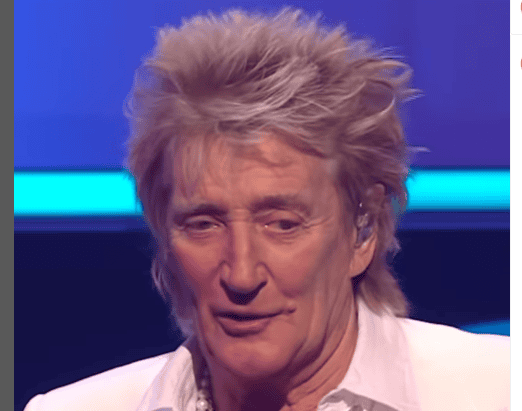
When Rod Stewart was the main attraction at Glastonbury, he became a powerful symbol of endurance. His appearance sparked a completely different type of conversation, even if his voice was raspy with the typical theatrical roughness. His face radiated a gentleness at 80 that left both critics and admirers wondering if nature had done all the work or if a covert plastic surgeon was part of the backstage staff.
Cosmedics Skin Clinics’ medical director, Dr. Ross Perry, evaluated Stewart’s remarkably young appearance with interest. According to Perry, Sir Rod’s complexion had “a warm glow,” remarkably free of the deep-set creases and sun damage one would normally anticipate after decades of performing in the sun and under strong lighting. Rod is “incredible for his age,” according to Perry, and while strong genes may play a role, lifestyle choices and potential cosmetic procedures also probably play a role.
Rod Stewart – Profile Summary
| Attribute | Details |
|---|---|
| Full Name | Sir Roderick David Stewart |
| Common Name | Rod Stewart |
| Date of Birth | January 10, 1945 |
| Age | 80 |
| Nationality | British |
| Profession | Singer, Songwriter, Performer |
| Notable Hits | “Maggie May”, “Forever Young”, “Do Ya Think I’m Sexy?” |
| Known For | Iconic raspy voice, flamboyant style, legendary rock career |
| Surgeries Confirmed | Full knee replacement, ankle fusion (due to football injuries) |
| Speculated Enhancements | Eyelid lift, Botox, cheek fillers, dental work, hair maintenance |
| Reference Website | https://www.rodstewart.com |
Astute viewers pointed out that Rod’s eyelids don’t sag like those of many guys his age do. According to Dr. Perry, this noticeably raised appearance could be explained by a small eyelid lift, which would discreetly address what he referred to as “common age-related drooping.” He also brought up the potential application of Botox around the eyes to subtly reduce crow’s feet, which is a very popular option for actors who depend on expressive faces. If this is the case, these improvements were implemented with remarkable accuracy and control.
Rod Stewart has never acknowledged having any facial rejuvenation plastic surgery. He has been open about orthopedic surgeries, though. He talked candidly about how his aggressive football career had affected his lower limbs on The Harry Redknapp Show podcast. He had had an ankle fusion to correct a crooked limb after undergoing a complete knee replacement. He remarked, “I should be able to run now that I have a nice straight leg.” Alongside these statements, his wife, Penny Lancaster, enthusiastically declared that his replacement knee was “better than ever.”
His remarks about his apparently ageless visage do not reflect the medical openness he provides about sporting injuries. In a celebrity culture that increasingly encourages openness about cosmetic alterations, that silence has become especially apparent. Stewart maintains the calm dignity of his personal rituals, in contrast to celebrities like Jane Fonda and Sharon Osbourne who have openly talked about their experiences with plastic surgery.
His cheeks are still noticeably plump, which Dr. Perry said could be a sign of mild dermal fillers. Hollowed features are a common result of men’s facial volume reduction as they age, but Rod seems to have escaped that fate. It’s unclear if this is the result of sophisticated aesthetic procedures or naturally thick subcutaneous fat. However, the end effect is obvious: a face that conveys tales without sagging.
Additionally, his dental presentation follows current trends in cosmetic augmentation. Rod’s teeth are not too symmetrical or unnaturally white, which is a testament to the competence of the cosmetic dentist who may have created his enduring smile. Such dental work, according to Perry, “suits his appearance” and subtly but significantly adds to his young charm. Like a well-written song, a well-crafted grin can subtly affect how people perceive you.
Most notably, his hair seems to be stuck in a time warp. It is still a crucial component of his rock persona—wild, emphasized, and thick. Given that the majority of men his age show noticeable graying or thinning, many admirers and onlookers believe that some form of hair restoration or therapy may be the cause. Stewart’s mane continues to be extraordinarily efficient at removing years from his appearance in a world when follicular longevity is uncommon. It still conveys vitality, disobedience, and a refusal to fade into old age.
Stewart has also shown throughout the years that he takes a rock-and-roll and rigorous approach to health. He acknowledges having post-concert parties with bottles of wine and rum, but he counterbalances this luxury with regular performance routines and boxing exercises that would wear out even younger performers. At his age, the physical endurance needed to tour—especially with surgically repaired joints—indicates a degree of training and care that goes beyond vanity.
Between indulgence and upkeep, between rock anarchy and self-discipline, this silent balancing act reflects the more complex demands of aging celebrities. Stewart doesn’t seem to be stuck in a rut or depend on violent interventions that skew identity. Rather, if there are any modifications, they are executed with extraordinary delicacy. His image is merely renewed, but his soul is unaltered.
His stylistic decisions reflect a larger trend in the industry among older male artists. Though they are frequently praised for outcomes that women are still criticized for, guys are now more and more included in the equation where female celebrities have long been criticized for using cosmetics to battle aging. The way that the media and fans discuss operations like Botox or eyelid lifts is still ingrained with this double standard. Whether on purpose or not, Rod Stewart subverts that narrative by portraying aging as a controlled progression rather than a struggle.
“No more competitive football for me—I can’t go sideways on my knee,” Stewart said sarcastically in response to a straight question about whether his football career was over. His bodily change was not merely cosmetic; rather, it was a means of restoring his mobility and enhancing his quality of life. He may be treating aesthetic upkeep in a similar way—quiet, deliberate, and focused on remaining functional rather than just appearing perfect—because of his readiness to adjust and recover.
The greater lesson to be learned from Rod Stewart’s visual legacy is not whether he had work done, but rather how well he handles aging. Stewart’s face is expressive rather than expressionless in a society that frequently demands a youthful appearance at any costs. He still moves deliberately and without stilts. The unique flair that made him a household celebrity is still present in his voice, hair, and smile.


Leave a Reply