

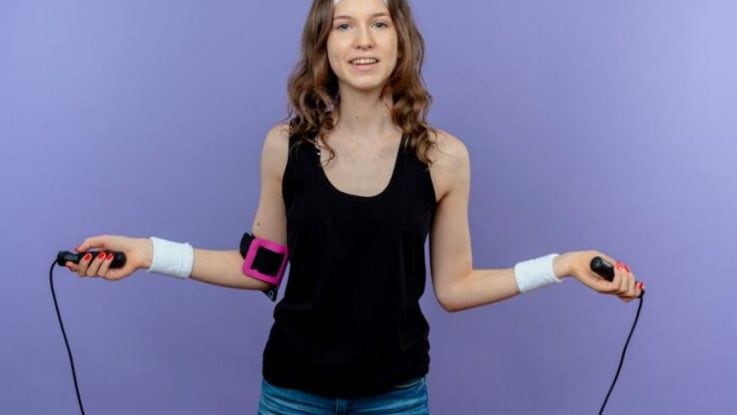
Skipping is no longer merely a playground relic; it has been incredibly successful in transforming adult workout regimens, providing a calorie-burning intensity that, once rhythm takes over, seems nearly simple. A half-hour of skipping may burn as many calories as an 8-mile run, according to experts, making it especially advantageous for people who are pressed for time but are nonetheless committed to making significant changes.
The full-body, high-impact aspect of the exercise is the scientific basis for its efficiency. Every jump makes the heart and lungs work much harder while working the legs, arms, and core. This kind of training becomes extremely effective in the context of contemporary health issues because it not only reduces body fat but also increases endurance, fortifies bones, and enhances agility all in one session.
Key Insights – Skipping and Weight Loss
| Aspect | Information |
|---|---|
| Exercise Type | Skipping (Jump Rope) |
| Core Benefits | Burns calories, tones muscles, boosts endurance, strengthens bones |
| Calories Burned | Up to 420 calories in 30 minutes for a 155-pound adult |
| Weight Loss Mechanism | Creates calorie deficit when paired with diet |
| Health Impact | Improves heart health, stamina, balance, and coordination |
| Equipment Required | Rope and supportive shoes |
| Accessibility | Portable, surprisingly affordable, requires little space |
| Training Style | Best with intervals, gradual progression, consistency |
| Suitability | Adults and athletes, with caution for joint issues |
| Reference | Healthline – Jumping Rope for Weight Loss |
Skipping has gained popularity among athletes and celebrities in the last ten years, who attest to its life-changing benefits. Although boxers have traditionally utilized ropes in their training, fitness bloggers and public personalities like Gigi Hadid have recently promoted skipping sessions as a weight-loss tactic. Because of their support, the practice is remarkably comparable to past fitness fads that gained popularity after making it to the circles of celebrities.
It is very evident that without dietary alignment, skipping won’t be enough to maintain weight loss. The major factor is still the number of calories burnt and consumed. But because skipping burns calories more quickly than many other activities, it speeds up development and makes room for a balanced diet to play a role. A Reddit member highlighted how moderation and consistency frequently triumph over extremes by sharing that they shed 20 pounds in four months by alternating 25 minutes of skipping with a jog every day.
In contrast to certain gym-based exercises that need pricey equipment or intricate timetables, skipping is surprisingly inexpensive and highly adaptable. An entire range of training styles, from simple jumps to complex double-unders and inventive footwork variants that sustain motivation, may be unlocked with a rope that costs less than a café meal. Unlike treadmill jogging, this flexibility guarantees that the activity never seems boring, which can significantly increase adherence.
Skipping saw a resurgence during the pandemic, when gyms shuttered and at-home workouts became more popular. Ropes fit neatly into office corners, backyards, and even bedrooms as people found themselves condensing their workouts into smaller areas. Many people made skipping their primary aerobic exercise by using online lessons, transforming necessity into habit—and for some, habit into transformation.
The advantages have been highlighted by medical study with remarkably robust evidence. Regular rope workouts lower waist circumference and abdominal fat, which are indicators frequently linked to increased cardiovascular risk, according to studies published by Medical News Today. Weight loss and skeletal resilience are two benefits of skipping for women, especially those at risk for osteoporosis, because to its bone-strengthening properties.
For optimal effect, coaches frequently advise including skipping into interval training. For instance, high-intensity interval training, which has been demonstrated to burn fat considerably more quickly than steady-state cardio, is mirrored by repeated repetitions of 30 seconds of rapid skipping followed by a minute of rest. Alongside the fat loss, muscular tone and endurance increase with time.
Beyond the statistics, however, skipping also joyfully re-establishes people’s connection to movement. The rhythm of the rope and feet, which is quite similar to dancing, provides a sense of play that helps reduce psychological obstacles to exercise, unlike mechanical workouts. This emotional element is sometimes disregarded, but it works incredibly well to maintain people’s consistency throughout months as opposed to days.
The public is paying attention. Nowadays, social media campaigns featuring fitness gurus who incorporate skipping challenges garner millions of views and promote community-driven responsibility. There has been a noticeable cultural shift: what was formerly viewed as a kid’s hobby is now marketed as a high-end training equipment that Olympians, actors, and regular people looking to improve their health utilize.
As technology becomes more integrated with skipping ropes, the practice may acquire even more popularity in the years to come. Digital trackers already measure heart rate, calories, and rotations, turning a basic tool into an intelligent fitness tool. These developments demonstrate how skipping, which is already incredibly dependable in its simplicity, is being updated for a contemporary audience.
Leave a Reply