

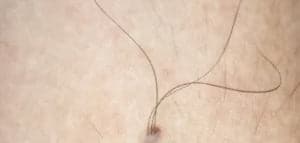
Two hairs emerging from one pore is a little but very fascinating phenomena that more people are starting to notice these days. This medically recognized disorder, known as pili multigemini, is significantly more structured than an ingrown hair or a shaving accident. Even though it may appear a little strange at first, it’s really common and, most importantly, usually harmless.
When a single follicle divides and produces numerous shafts of hair instead of just one, this is known as pili multigemini. The hair then appears darker, thicker, or abnormally stiff as a result of these strands pushing up through the same pore opening. Although it can be seen on scalps, backs, and other places with thick hair growth, it is most prevalent in beards. Dermatologists have discovered that each shaft in these follicles retains its own cuticle and structure when viewed under magnification, effectively producing several separate hairs that share a base.
Pili Multigemini – Simple Reference Table
| Term | Pili Multigemini |
|---|---|
| Meaning | A condition where multiple hairs grow from a single hair follicle |
| Common Locations | Beard, scalp, upper back, arms, legs, occasionally eyebrows |
| Cause | Unknown, believed to be genetic |
| Symptoms | None in most cases; occasionally itching or inflammation |
| Possible Complication | Folliculitis (inflammation or infection of hair follicle) |
| Removal Methods | Tweezing, laser hair removal, electrolysis |
| FDA-Recognized Treatment | Electrolysis (classified as permanent removal) |
| Harmful? | Not typically; cosmetic concern only |
| Reference Source |
Although the exact source of this aberration is unknown, some evidence points to a genetic component. The fact that multiple family members frequently observe the same pattern of hair growth suggests that hereditary follicle creation may be important. This illness rarely results in physical discomfort, is not harmful, and doesn’t call for medical attention. It is frequently missed until someone attentively inspects their skin when shaving or plucking because its visibility varies depending on hair type and hygiene habits.
Naturally, hair grows in four different stages. Pili multigemini starts to form during the anagen phase, which is the stage of active growth. The structure inside the follicular bulb divides, creating many shafts that rise together rather than a single shaft. This goes on until the catagen phase, a brief interval of transition during which the follicle shrinks and growth slows. The telogen phase, during which the hair rests, comes next. Finally, hair falls out to make room for new strands during the exogen phase. In the case of compound follicles, the regrowth may once more include several strands, and this cycle repeats indefinitely.
These complex hairs can occasionally cause irritation for certain people. This typically occurs when friction from tight clothing, shaving, or waxing disturbs the follicles. Folliculitis, an inflammatory reaction that produces tiny red pimples or pus-filled lesions, may develop in such cases. Those who often shave or use dull razors are especially likely to experience it. Although pili multigemini are not the only ones who get these razor bumps, having more than one hair per follicle can raise the risk because it makes it easier for germs and oils to get trapped.
Consult a dermatologist for treatment if folliculitis becomes severe or extensive. Fever, spreading redness, or foul-smelling pus are warning signals that need medical attention. These are uncommon results, nevertheless. The majority of instances go away on their own, particularly when proper shaving procedures and hygiene are followed.
People can manage the health and appearance of pili multigemini by using dermatologist-endorsed methods. Despite its short-term effectiveness, plucking might cause pain because of the increased follicular density. Nevertheless, it’s a fast, low-cost method that provides short-term elimination without long-term negative consequences. Laser hair removal is a particularly cutting-edge method for anyone seeking a more durable outcome. With each session, the treatment weakens hair regrowth by using laser pulses to target the follicle. Laser removal works well, however it might not be as good for very light or gray hairs.
Electrolysis is frequently advised in these circumstances. This FDA-approved method permanently destroys the follicle’s capacity to create hair by using tiny electrical currents. Despite the extremely effective results, the therapy necessitates several sessions and may cause mild redness or swelling right after. The only treatment that has been classified as really permanent is electrolysis, which is typically safe but carries some risk of scarring or mild infection if not performed under a professional’s supervision.
A common question is whether there’s a way to stop these clumped hairs from ever appearing. There is presently no known method to prevent pili multigemini from forming because the condition is most likely inherited. But it is very possible to lessen discomfort and avoid side effects like folliculitis. In order to prevent bacteria development, the American Academy of Dermatology suggests a few practical steps: always shave on damp skin, follow the normal hair growth direction, avoid reusing dull blades, and let razors dry completely between uses.
People have started talking more candidly about compound hair follicles in online forums and skincare communities. Finding images, anecdotes, and guidance on embracing or managing the illness is become simpler. The question, “Why do I have two hairs growing from one pore?” that used to cause anxiety is now frequently dismissed with a shrug and assurance. It’s just one more peculiarly precise way our bodies work.
Managing compound follicles can be easy with careful self-care and strategic education. It’s usually only a cosmetic irregularity. Professional hair removal treatments and delicate plucking are the solutions available to people who decide to treat it. In any case, it’s critical to acknowledge that this condition is more prevalent than most people realize and that it remarkably resembles other benign skin characteristics that we’ve accepted as normal.
Leave a Reply