

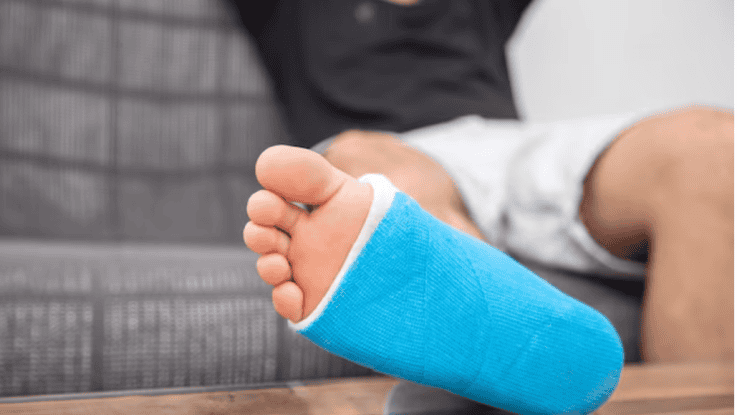
An injury to the big toe may seem insignificant to many top athletes—almost comical in comparison to fractured wrists or torn ACLs. However, when that injury is referred to as “turf toe,” it assumes a seriousness that has significantly changed medical procedures, professions, and footwear design in a variety of sports. This ailment, which is medically characterized as a metatarsophalangeal joint injury, usually begins as a silent sprain but, if ignored or mistreated, can quickly escalate into surgery.
Turf toe is the result of the big toe being firmly flexed upward while the rest of the foot stays grounded, usually during a sprint or pivot motion. The ligaments and soft tissues around the MTP joint are stretched or torn by this hyperextension, which makes even simple movement feel unsteady. The joint may dislocate completely or partially in really severe situations. Clinicians can better assess the severity of turf toe by using the grading system: Grade 1 denotes slight stretching, Grade 2 partial tearing, and Grade 3 complete rupture or dislocation.
Turf Toe Surgery – Injury Profile and Surgical Overview
| Item | Description |
|---|---|
| Affected Area | Big toe (metatarsophalangeal joint) |
| Severity Levels | Grade 1 (mild), Grade 2 (moderate), Grade 3 (severe/dislocation) |
| Common in | American football, soccer, gymnastics, ballet, martial arts |
| Non-Surgical Treatments | Rest, ice, NSAIDs, physical therapy, taping, orthotic shoes |
| Surgery Recommended For | Grade 3 injuries or failed recovery from Grades 1 or 2 |
| Recovery Timeline | 1–6 months depending on severity; longer if surgery is needed |
| Risk if Untreated | Chronic joint pain, stiffness, bunions, joint degeneration (hallux rigidus) |
| Clinical Reference |
Turf toe surgery has evolved in recent years from an uncommon necessity to a carefully considered choice for top sportsmen. The quarterback for the Kansas City Chiefs, Patrick Mahomes, had surgery after suffering an MTP injury that significantly restricted his range of motion during the postseason. Pain wasn’t the only factor in his choice to get surgery; accuracy was also a factor. A strong push-off from the lead foot is crucial for quarterbacks, and any toe joint restriction can drastically impair throwing force and directional agility.
Sports medicine experts have created incredibly successful rehabilitation regimens by studying the recuperation styles of sportsmen like Mahomes. Even though it is still uncommon, surgery can be especially helpful when soft tissue injury is resistant to conventional therapy. Once in the operating room, orthopedic surgeons use tiny implants or screws to straighten bones, strengthen joint capsules, and repair damaged ligaments. These operations are not hurried; they need very dependable imaging, preparation, and performance.
Athletes’ motions are frequently not the only factor contributing to this ailment. The surface is important. Because artificial turf, especially the older varieties, is much harder than grass, the foot will encounter more resistance when it tries to lift or spin. The frequency of turf toe instances recorded has significantly increased over the past ten years due to the proliferation of turf fields in university athletics, professional training facilities, and school programs. The development of footwear hasn’t always been beneficial either. Modern athletic shoes and cleats, which are made to be extremely light and flexible, unintentionally lessen forefoot protection. Toe hyperextension is made possible by this combination.
Dancers and gymnasts frequently face turf toe as a slow-building issue, whereas sports like football and soccer view it as a seasonal injury. The strain on the big toe builds up discreetly for a gymnast performing floor routines or a ballet dancer landing jumps repeatedly. The joint may already be severely injured by the time instability manifests. Performers in these sports frequently do not have instant access to diagnostic imaging or sports-focused doctors, which delays necessary care, in contrast to team athletes.
For people who have access to sports medicine networks, urgent turf toe surgery can be surprisingly inexpensive. However, insurance constraints often make decisions more difficult for amateur performers and athletes. Chronic stiffness, misaligned joints, and decreased mobility are long-term effects of skipping surgery that can disrupt daily functioning and professions well into adulthood. This discrepancy is indicative of a larger problem with the distribution of medical resources for injuries connected to performance.
Orthopedic clinics observed a little but significant rise in turf toe-like injuries that occurred at home during the epidemic. Soft tissue injuries in the foot increased sharply as a result of individuals being restricted indoors, frequently barefoot or wearing unsupportive flip-flops. Even though the majority of cases were minor, many of them were not well treated, which led to prolonged inflammation. These findings led physiotherapists and podiatrists to recommend structural shoes and warn against excessive use, even in the home.
Not every surgery proceeds as described in a textbook. The patient’s discipline, physical condition, and if the injury was exacerbated by additional foot or ankle problems all have a substantial impact on their recovery after surgery. The cornerstone of healing is physical therapy, which includes toe flexion exercises, balance drills, and a gradual return to weight-bearing activities. Professional athletes typically return to full strength in five to six months thanks to deliberate collaborations between surgeons and rehabilitation professionals, though some return earlier under closely watched regimens.
Turf toe surgery is an example of the increasing trend toward proactive care in sports medicine. Many medical teams are detecting ligament instability before it worsens by using specific taping techniques and early diagnostic imaging. The goal of this strategy, which is especially novel in young leagues and university programs, is to completely cut down on Grade 3 injuries.
In extreme situations, trainers have noticed minor reductions after the introduction of more cushioning artificial turf varieties. However, the problem is still systemic. Manufacturers of footwear must consider toe protection in addition to grip and speed while designing in order to minimize turf toe. It is imperative to involve medical experts in product testing to maintain biomechanical equilibrium. Above all, players need to be taught since, without prompt rest and care, toe discomfort can quickly worsen and create long-term harm.
The lesson is equally important for athletes in their early stages. Foot health is fundamental, not optional. Players can prepare the toe joint to withstand unexpected pressures by including strength and stability exercises in their training regimens. Sports organizations and coaches also need to reconsider rehabilitation schedules. In addition to being dangerous, rushing back onto the field with unresolved inflammation can change your career.
The discussion around turf toe surgery serves as an example of how minor anatomical problems frequently indicate more significant structural flaws as the sports industry as a whole continues its drive toward sustainability, inclusion, and injury prevention. Every factor influences how injuries develop and how healing is accomplished, whether it’s the irregularity in recovery culture, the rigidity of surfaces, or the minimalist design of footwear.
Leave a Reply